
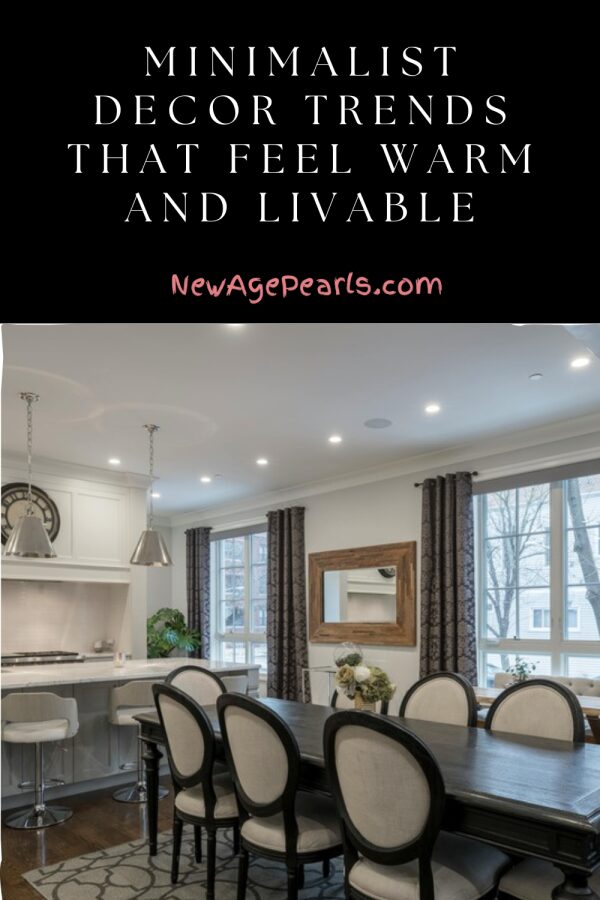
Can we talk about how minimalism got such a bad reputation for being cold and unwelcoming? I think it’s because people confuse minimalism with sterility. Real minimalism—the kind that actually makes you want to spend time in your space—is about intentionality and quality, not deprivation. Let me show you what’s trending in warm minimalism that actually feels like home.
The Japanese concept of “warm minimalism” is leading the way right now. It’s about natural materials, soft neutrals, and pieces that have purpose and beauty. Think blonde wood furniture, linen textiles, and handmade ceramics. Everything in the space serves a function but also brings joy. I’ve incorporated this by choosing furniture with visible wood grain and keeping surfaces mostly clear except for a few meaningful objects.
Texture is the secret ingredient that makes minimalist spaces feel cozy instead of clinical. I layer different textures—a chunky knit throw over a smooth leather sofa, a jute rug under a sleek wooden coffee table, matte ceramic vases next to glossy picture frames. When you strip away visual clutter and color, texture becomes what creates interest and warmth.
The “lived-in minimalism” trend is my favorite evolution of the style. It acknowledges that real people live in these spaces. You’ll see a single stack of well-loved books, a cozy reading nook with a soft blanket, or a beautiful bowl of fruit on the counter. It’s curated but not precious. I keep out only the things I use and love, but I don’t hide the fact that I actually live here.
Warm whites and off-whites are replacing the stark bright whites that made earlier minimalism feel so cold. Cream, ivory, linen white, and warm gray create a soft backdrop that’s still clean and simple but much more inviting. I painted my walls in a warm white with just a hint of beige and it completely changed the energy of my space.
Organic shapes are softening the hard lines that used to define minimalist design. Curved sofas, round mirrors, and sculptural lighting add visual interest without clutter. I recently swapped my rectangular coffee table for an oval one and it made such a difference—the space feels gentler and more approachable.
Thoughtful lighting is huge in warm minimalism. Instead of harsh overhead lights, layer in table lamps, floor lamps, and candles. Warm-toned bulbs make everything feel cozier. I use dimmers on all my lights so I can adjust the mood, and I always have candles going in the evening.
The trend toward “slow living” spaces means incorporating nature. This isn’t about filling your house with plants—it’s about being intentional with greenery. One beautiful fiddle leaf fig in the corner or a simple vase of branches can be more impactful than a jungle of random plants. I keep a few statement plants that I actually take care of rather than a bunch of struggling succulents.
Open shelving with breathing room is replacing packed bookcases. The idea is to display fewer things but make each item count. I style my shelves with plenty of negative space—maybe a small stack of books, a pretty vase, and one meaningful object per shelf. It looks curated without being cold.
The key to making minimalism livable is remembering that it’s about creating space for what matters, not just getting rid of stuff. Every piece in your home should earn its place by being either beautiful or useful—ideally both.
Leave a Reply