
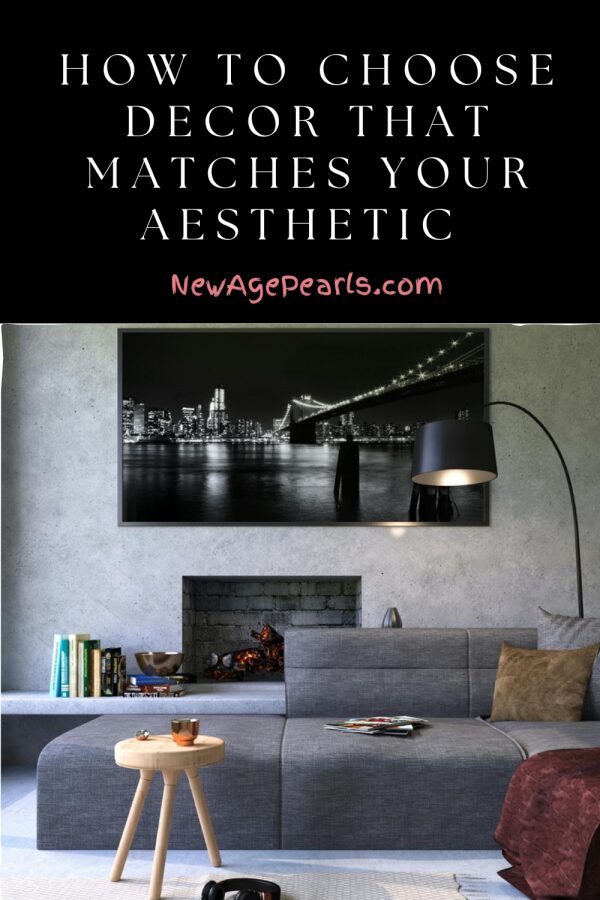
I spent years buying random decor items I liked in the moment, and my apartment looked like a confused Pinterest board threw up. Nothing went together because I didn’t actually know what my aesthetic was—I just knew I liked “pretty things.” If this sounds familiar, let me walk you through how I finally figured out my style and how you can too.
Start by collecting inspiration without overthinking it. I made a private Pinterest board and saved every room that made me stop scrolling. I didn’t analyze why I liked them—I just saved them. After a few weeks, I had maybe 50 images. Then I looked at them all together and the patterns became obvious. For me, it was neutral colors, natural materials, and clean lines. Your patterns might be totally different—maybe you’re drawn to bold colors, or vintage pieces, or maximalist layering.
Look at what you’re already drawn to. Walk through your home and identify the pieces you love most. What do they have in common? My favorite things were all in earth tones with natural textures. That told me something. Also look at your wardrobe—there’s usually overlap. If you wear mostly black and white with clean lines, you probably won’t love a super colorful, eclectic boho space.
Try the word association game. When you think about how you want your space to feel, what words come up? Cozy, modern, airy, dramatic, vintage, minimal? I wrote down every word that resonated and then googled those terms plus “interior design.” “Cozy modern interior” and “minimal natural aesthetic” brought up tons of images that felt right to me.
Create a physical mood board if digital isn’t clicking. Tear pages from magazines, print Pinterest images, grab paint swatches, collect fabric samples. Lay them all out and see what feels cohesive. This hands-on approach helped me see that I needed more texture variation even within my neutral palette.
Take the elimination approach. Look at different defined styles—mid-century modern, French country, industrial, Scandinavian, maximalist, traditional. Which ones make you immediately think “not for me”? Process of elimination helps narrow things down. I realized I liked elements of several styles but full-on traditional or ultra-modern weren’t me.
Pay attention to what you criticize. When you’re at a friend’s house or scrolling social media, what makes you think “that doesn’t work”? For me, it was spaces that felt too cold or too cluttered. That told me I needed warmth and breathing room—hello, warm minimalism.
Start small and build. Don’t try to decorate your entire place at once based on what you think your aesthetic is. Buy one piece you love, live with it, and see how you feel. Then add things gradually. Your aesthetic might evolve as you go, and that’s totally fine. Mine definitely has.
Consider your lifestyle honestly. Your aesthetic should work with how you actually live. If you have kids and pets, that all-white minimalist dream might be more stressful than beautiful. If you love hosting, your space needs to be functional for groups. I work from home so my aesthetic had to include comfortable, practical workspace solutions.
Don’t force yourself into a box. You don’t need to identify as one specific style. I’m like “warm minimalism meets organic modern with a touch of coastal” and that’s totally fine. Mix what you love. The most interesting spaces have layers and personality.
Trust your gut over trends. If everyone’s doing maximalist grandmillennial style but you keep gravitating toward clean, simple spaces, honor that. Your home should make you feel good, not like you’re living in someone else’s Instagram feed. My aesthetic might not be trendy forever, but it feels authentically me, and that matters way more.
Leave a Reply