
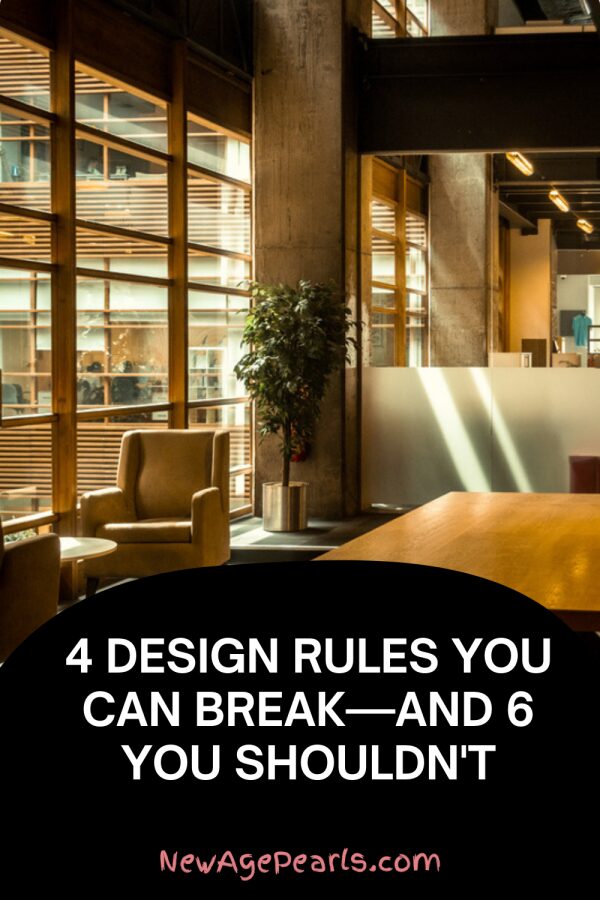
Design rules exist for good reasons, but treating them as absolute laws stifles creativity and personal expression. Some guidelines are flexible suggestions that can be bent to suit your taste and space. Others are foundational principles that, when ignored, create genuine problems. Learning which is which helps you design spaces that feel both personal and professionally composed. Here’s your guide to what’s negotiable and what isn’t.
Rules You Can Break
All Furniture Should Match
The old rule that bedroom sets, living room suites, and dining collections must match creates flat, showroom spaces. Real homes accumulate pieces over time. Mixing styles, eras, and finishes creates depth and character. Your dining chairs don’t need to match your table. Your nightstands can differ from each other. What matters is that pieces relate through color, scale, or style rather than being identical. This approach creates collected, personal spaces instead of catalog recreations. The key is ensuring enough common ground—similar wood tones, complementary colors, or related styles—so the mix feels intentional rather than random.
White Walls Are Boring
Design purists often insist white walls lack personality, but white is actually an incredibly versatile backdrop that makes everything else in your room pop. White walls showcase art, furniture, and textiles without competition. They make small spaces feel larger and dark rooms brighter. Different white tones—warm, cool, or neutral—create different moods. If you love clean, minimal aesthetics or want your collections and furniture to shine, white walls are a legitimate choice, not a cop-out. The “rule” against white usually comes from designers who want to showcase their color expertise, but it’s perfectly valid to embrace white as an intentional design decision.
Don’t Mix Metals
The old prohibition against mixing brass, chrome, nickel, and other metal finishes is outdated. Modern spaces successfully combine different metals for visual interest. The key is distribution. Don’t alternate metals like a checkerboard. Instead, let one metal dominate (60-70% of fixtures) and use others as accents. Ensure enough separation so metals aren’t directly beside each other competing for attention. Mixed metals add sophistication and prevent spaces from feeling too matchy. This works particularly well in kitchens and bathrooms where various fixtures naturally occur.
Every Room Needs a Focal Point
While focal points help organize spaces, not every room requires one obvious star. Some spaces work beautifully with balanced, distributed interest where your eye moves naturally around the room without landing on a single dominant feature. This is especially true in smaller spaces where forcing a focal point can feel contrived. If your room functions well and feels harmonious without an obvious focal point, that’s fine. The space itself can be the point, not a single feature within it.
Rules You Shouldn’t Break
Proper Scale and Proportion
Furniture that’s too large overwhelms spaces; pieces that are too small look lost and awkward. This rule is non-negotiable because it affects how rooms function and feel. Measure your space before buying furniture. Ensure sofas fit through doorways and leave adequate walking space. Coffee tables should be two-thirds the length of your sofa. Nightstands should roughly match mattress height. Rugs must be large enough for furniture legs to sit on them. Getting scale wrong makes spaces feel off no matter how beautiful individual pieces are. Use painter’s tape to mark furniture footprints before purchasing to ensure proper fit.
Adequate Lighting Layers
Relying solely on overhead lighting creates harsh, unflattering spaces. This rule exists because of how humans respond to light psychologically and physiologically. Multiple light sources at different heights—ambient, task, and accent—are essential for functional, comfortable rooms. You need general illumination, focused light for activities, and atmospheric lighting for mood. Single-source lighting flattens spaces and creates harsh shadows. This isn’t about aesthetics—it’s about creating livable environments. Every room needs at least three light sources. This rule directly impacts quality of life, not just appearance.
Function Must Come First
Beautiful rooms that don’t work for their intended purpose fail fundamentally. A living room with nowhere to set drinks, a bedroom with inadequate storage, or a kitchen with poor workflow creates daily frustration. Design should enhance life, not complicate it. Before considering aesthetics, ensure rooms serve their purpose well. Furniture must be comfortable for actual use, not just attractive. Storage must be adequate and accessible. Traffic flow must be clear. When function suffers for aesthetics, you’ll resent the space rather than enjoying it. Beauty and function aren’t opposites—good design integrates both seamlessly.
Proper Furniture Placement
Furniture pushed against every wall, blocking windows, or creating awkward traffic patterns makes spaces dysfunctional. This rule matters because it affects how you move through and use rooms daily. Leave adequate clearance for walking—30-36 inches for major pathways. Float furniture to create conversation areas. Ensure doors can open fully. Don’t block windows or heating vents. Position seating to facilitate interaction rather than forcing people to crane their necks. These placements affect livability fundamentally. A beautiful room with poor furniture placement frustrates daily use.
Visual Balance and Weight
Rooms need visual balance—not symmetry necessarily, but equilibrium where one side doesn’t overwhelm the other. This rule is rooted in how our brains process visual information. Unbalanced rooms feel unsettling even if we can’t articulate why. Distribute visual weight around the room. If you have a large sofa on one wall, balance it with substantial art, a bookshelf, or large plant opposite. Dark colors and large objects carry more visual weight than light colors and small items. Achieving balance creates psychological comfort. Ignoring it makes spaces feel tipped or heavy on one side.
Quality Over Quantity
Fewer high-quality pieces beat many cheap items every time. This isn’t snobbery—it’s practical. Quality items last longer, look better, and often cost less over time than repeatedly replacing poor-quality pieces. They also affect how entire rooms feel. One beautiful sofa elevates a space more than three cheap ones. This rule protects your budget and creates more satisfying environments. Resist the urge to fill rooms quickly with mediocre pieces. Buy less, buy better, and build slowly. The quality rule applies especially to hardworking items like sofas, beds, and dining tables that you interact with daily.
Understanding which rules serve function and psychology versus which are stylistic preferences helps you design confidently. Break rules that limit personal expression, but respect those rooted in how spaces actually work and feel. The best interiors balance creative rule-breaking with fundamental principles that make rooms livable and comfortable.
Leave a Reply