
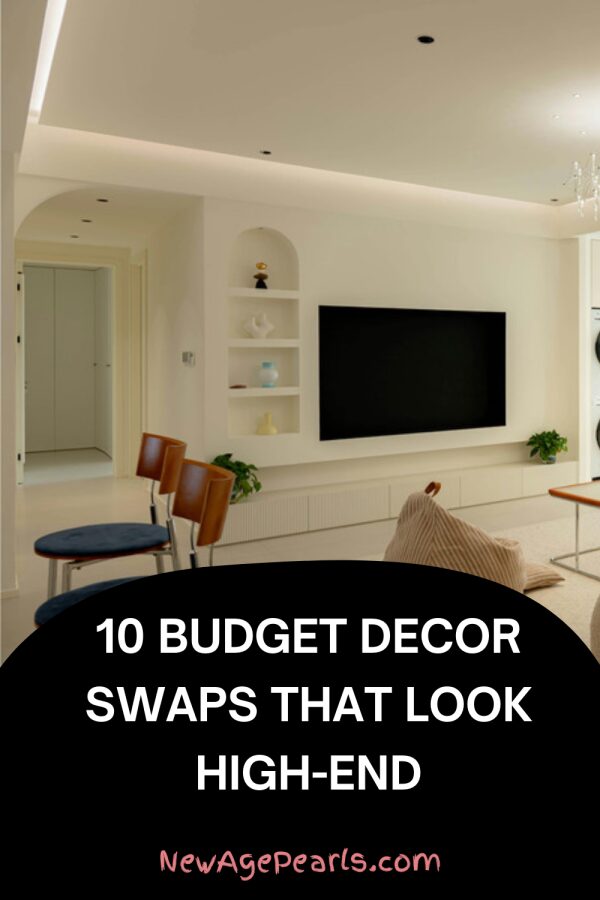
Creating an expensive look on a budget isn’t about deception—it’s about understanding what signals quality and investing strategically in those elements while saving on pieces where the difference isn’t visible. These ten swaps prove you don’t need unlimited funds to create sophisticated spaces. The key is knowing where quality is perceptible and where affordable alternatives perform just as well.
Swap Cheap Curtain Rods for Substantial Hardware
Thin, flimsy curtain rods scream budget, while substantial rods in quality finishes look expensive. Replace lightweight rods with 1-inch diameter or thicker options in brushed brass, matte black, or oil-rubbed bronze. Quality rods don’t need to cost hundreds—many retailers offer affordable options that look high-end. The visual weight of substantial hardware elevates your entire window treatment. Even budget curtains look better on quality rods, while expensive curtains look cheap on flimsy hardware. This swap transforms how your windows—and by extension, your rooms—appear.
Swap Overhead Lighting for Layered Lamps
Builder-grade ceiling fixtures look institutional. Instead of expensive fixture replacement, turn off overhead lights and add table and floor lamps. Quality lamps in interesting shapes with warm bulbs create the layered lighting of high-end homes. Look for lamps with ceramic, marble, or turned wood bases—these materials read as more expensive than basic metal or plastic. You can find these at budget retailers or secondhand. This swap changes your room’s entire atmosphere from harsh to sophisticated while actually saving on electricity.
Swap Thin Pillows for Quality Inserts
Flat, lifeless pillows make sofas look cheap regardless of the covers. Replace thin inserts with down or down-alternative inserts sized two inches larger than your covers (22-inch insert for 20-inch cover). This creates the plump, inviting look of expensive pillows. Keep budget covers if you like them—the insert is what makes the difference. Quality inserts can be moved to new covers as your style changes, making them a smart investment. This swap takes minutes and completely changes how your seating looks.
Swap Wire Hangers for Matching Slim Velvet
Visible closet chaos feels cheap; organized closets suggest luxury. Replace mismatched hangers with matching slim velvet hangers in one color. These affordable hangers prevent clothes from slipping, save space, and create the organized look of high-end closets. When you open your closet and see uniformity instead of wire hanger chaos, your entire home feels more expensive. This swap costs little but affects how you feel about your space daily.
Swap Cheap Frames for Solid Options
Art in cheap frames looks cheap; art in substantial frames looks valuable. Replace thin plastic or lightweight metal frames with simple wooden frames in black, white, or natural wood. Even thrift store art looks elevated in proper framing. Look for frames at craft stores when they’re 40-50% off, or check thrift stores for quality vintage frames you can update with paint. The frame matters as much as the art for perceived value. This swap makes your walls look curated and considered.
Swap Visible Plastic for Natural Materials
Plastic, no matter how convenient, reads as inexpensive. Replace visible plastic items—trash cans, storage bins, soap dispensers—with versions in wood, metal, ceramic, or woven materials. A wooden waste basket costs barely more than plastic but looks infinitely better. Ceramic soap dispensers elevate bathrooms immediately. Woven storage baskets feel warm and intentional. This swap eliminates the visual cheapness of plastic while maintaining functionality. Focus on items that are always visible—these have the biggest impact.
Swap Small Rugs for Properly Sized Ones
Undersized rugs make rooms look cheaper and smaller. Save for a properly sized rug rather than buying a too-small version immediately. In living rooms, front furniture legs should sit on the rug; in dining rooms, rugs should extend beyond table edges so chairs remain on the rug when pulled out. One proper-sized rug in a budget-friendly material like polypropylene looks better than an expensive but undersized rug. This swap might require patience while saving, but it’s worth it. Proper scale signals design knowledge and investment.
Swap Builder-Grade Hardware for Updated Finishes
Cabinet pulls, drawer handles, and door knobs are inexpensive to replace but dramatically impact how rooms feel. Swap standard hardware for options in matte black, brushed brass, or brushed nickel. Even basic hardware in updated finishes looks more expensive than ornate hardware in dated finishes. Measure carefully before ordering, and install with a template for precise placement. This swap is DIY-friendly and transforms kitchens and bathrooms for minimal investment. Updated hardware suggests quality beyond what’s actually there.
Swap Artificial Plants for Quality Faux or Real
Obvious fake plants look worse than no plants at all. If live plants aren’t feasible, invest in one or two high-quality faux stems rather than many cheap ones. Modern faux plants look remarkably real and last indefinitely. Alternatively, commit to easy real plants like pothos or snake plants that thrive on neglect. Greenery adds life and luxury to spaces, but only if it looks believable. One quality faux fiddle leaf fig beats five dollar-store fake flowers. This swap adds organic sophistication without obvious fakery.
Swap Overhead-Only Lighting for Warm Bulbs Throughout
Simply changing all bulbs to consistent warm temperature (2700K) makes spaces feel exponentially more expensive. Cool white or daylight bulbs feel institutional; warm light feels luxurious. Replace every bulb in connected spaces with matching temperature. Add dimmer switches to control ambiance. This incredibly affordable swap changes how your entire home feels. Expensive interiors always have warm, adjustable lighting. This might be the highest-impact, lowest-cost swap on this list.
These ten swaps share a common thread: they address elements that significantly impact perceived quality without requiring major investment. None demands a complete room overhaul or substantial budget. Instead, they’re strategic improvements that offer disproportionate returns on small investments. The key is understanding what the eye registers as quality—substantial hardware, proper scale, natural materials, warm light, organization—and ensuring those elements are present even if other pieces are budget-friendly.
You don’t need to make all these swaps simultaneously. Choose one or two that would most impact your space and start there. As budget allows, add others. The cumulative effect of several small upgrades creates spaces that feel far more expensive than their actual cost. This approach lets you create sophisticated, elevated interiors gradually, ensuring each swap is thoughtful and well-executed rather than rushed or haphazard.
The beauty of these swaps is their accessibility. You don’t need design expertise or contractor help—just awareness of what signals quality and the willingness to make strategic changes. When you invest in the elements that register as expensive and save on those where the difference isn’t perceptible, you create genuinely beautiful spaces on realistic budgets.
Leave a Reply