
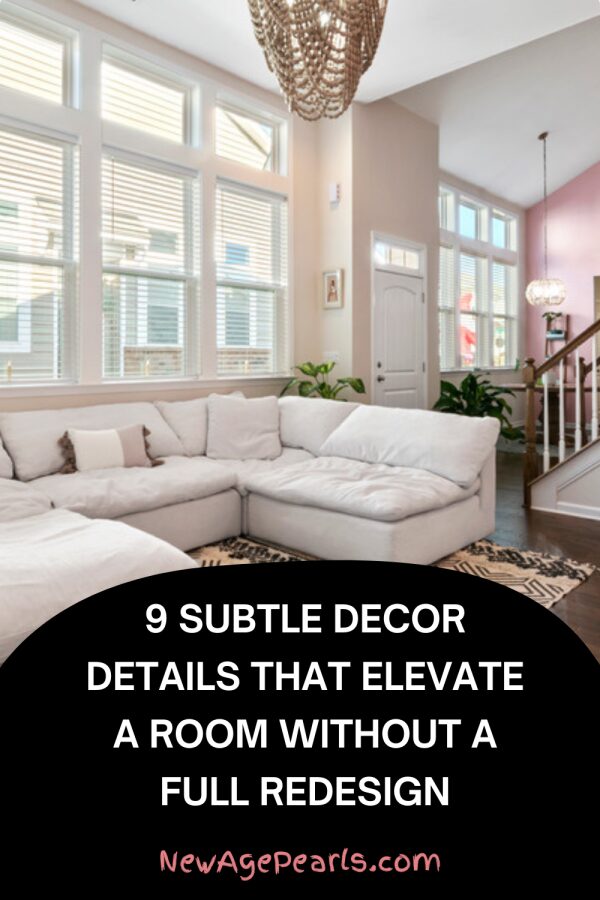
Major redesigns aren’t always necessary or feasible. Often, rooms need subtle refinement rather than complete overhauls. These nine details elevate spaces through small, strategic additions that create disproportionate impact. They’re the finishing touches that transform good rooms into great ones, and they work regardless of your existing style or budget.
Add Picture Ledges for Flexible Display
Instead of hanging everything permanently, install picture ledges that allow you to lean art, photos, and objects. This creates the layered, collected look of thoughtfully styled spaces while maintaining flexibility. You can easily rotate items, adjust arrangements, and experiment without putting holes in walls. Ledges work above sofas, in hallways, or on blank walls. Layer frames at different sizes, tuck smaller pieces behind larger ones, and intersperse decorative objects among art. This approach feels more curated and less static than traditional gallery walls. The ledges themselves are simple and inexpensive, but the display they enable looks expensive and professional.
Replace Visible Screws with Decorative Hardware
Look around your room—where do you see exposed screws? Light switch plates, outlet covers, vent covers, cabinet hardware? Replacing standard Phillips head screws with flat-head screws in matching finishes creates polish most people won’t consciously notice but everyone will feel. This tiny detail suggests attention to refinement. Choose screws that match your room’s metal finish—brass for warm spaces, nickel for cool ones. This upgrade costs pennies per screw but eliminates tiny visual distractions that undermine sophistication. It’s the kind of detail that separates truly finished spaces from almost-finished ones.
Layer Rugs for Depth
Instead of one standard rug, layer a smaller, textured rug over a larger, neutral one. This creates visual interest and adds depth without commitment or expense. Try a vintage runner over a natural jute rug, or a cowhide over a simple gray rug. Layering lets you incorporate pattern or color in a smaller, more affordable dose while the base rug provides foundation. This technique adds sophistication associated with collected, traveled spaces. It also solves the problem of rugs that are slightly too small—layer them over properly sized base rugs for proper proportion with added interest.
Add Hidden LED Strips
Under-cabinet lighting in kitchens, under-shelf lighting in bookcases, or under-console lighting creates ambiance and sophistication. These hidden light sources add dimension without visible fixtures. Battery-operated LED strips are easy to install and require no wiring. This subtle lighting makes rooms feel more layered and considered. It’s particularly effective under floating vanities, inside glass-front cabinets, or under mantels. The glow adds atmosphere while highlighting architectural details. This detail mimics high-end designer techniques without requiring electrical work or significant investment.
Include One Unexpected Material
Every room benefits from one element that surprises—something that doesn’t obviously belong but somehow works. This might be lucite or acrylic in a traditional room, rough-hewn wood in a sleek modern space, or brass in an otherwise silver-toned environment. This unexpected material adds personality and prevents rooms from feeling too matchy or predictable. It suggests confidence in your design choices. The key is limitation—one unexpected element reads as intentional; multiple unexpected elements read as confused. Choose something that relates to your existing palette or materials while offering contrast.
Frame Mirrors and Art Identically
Take multiple frames in different styles and spray paint them the same color—matte black, white, or gold. Hang them together for cohesion created through finish rather than design. This technique unifies disparate pieces and creates the intentional look of curated collections. It’s particularly effective for thrift store finds or inherited pieces that don’t naturally go together. The unified finish makes different sizes, shapes, and artwork feel related. This costs almost nothing but creates sophistication that expensive matching frames provide, while maintaining more visual interest.
Add Sound Absorption
Rooms with hard surfaces echo; rooms with sound absorption feel comfortable and expensive. Add elements specifically for acoustic improvement: a large upholstered headboard, heavy curtains, an upholstered bench, or acoustic panels disguised as art. These elements don’t just look good—they make spaces sound better, which affects how rooms feel even if you don’t consciously notice. Hard, echoey rooms feel cold and institutional. Spaces with sound absorption feel intimate and refined. This detail is especially important in rooms with lots of hard flooring, high ceilings, or minimal fabric.
Style Cords as Design Elements
Since hiding every cord isn’t always possible, incorporate them intentionally. Use fabric-wrapped cords in colors that complement your room. Route cords along architectural lines rather than letting them drape randomly. Use decorative cord covers that add rather than detract. Sometimes positioning a lamp so its cord runs along a table leg and down to a baseboard creates cleaner lines than trying to hide it entirely. This approach acknowledges reality while maintaining aesthetics. Styled cords look intentional; hidden cords look considered; random tangled cords look sloppy.
Include Greenery at Multiple Heights
Rather than one plant, distribute greenery throughout the room at varying heights. A large floor plant, a medium plant on a side table, and a trailing plant on a shelf creates layers that mimic nature and add life throughout the space. This distribution makes rooms feel more abundant and considered than a single plant, however beautiful. Vary plant types for textural interest—something with large leaves, something trailing, something upright. This technique works with real or quality faux plants. The varied heights draw the eye around the room and create the lived-in, cared-for look associated with elevated spaces.
These nine details share an important characteristic: they’re small interventions with outsized impact. None requires major investment, contractor help, or permanent changes. Yet each adds the kind of refinement that separates professionally designed spaces from DIY ones. The cumulative effect of several of these details transforms rooms from nice to noteworthy.
The key to these details is their subtlety. Guests won’t necessarily notice the matching screws on your light switches or the LED strips under your shelves, but they’ll register the overall impression of refinement and thoughtfulness. These are the touches that make people say a room “feels expensive” or “looks professionally designed” without identifying exactly why. They create polish through accumulation of small, careful choices.
You don’t need to implement all nine details in every room. Choose two or three that would most benefit your specific space. Perhaps your living room needs layered rugs and distributed greenery. Maybe your bedroom would benefit from picture ledges and sound absorption. Select details that address your room’s particular needs while aligning with your aesthetic and budget. These refinements work incrementally—add one, assess the impact, then add another. This gradual approach lets you develop your space thoughtfully rather than rushing to finish.
Leave a Reply