
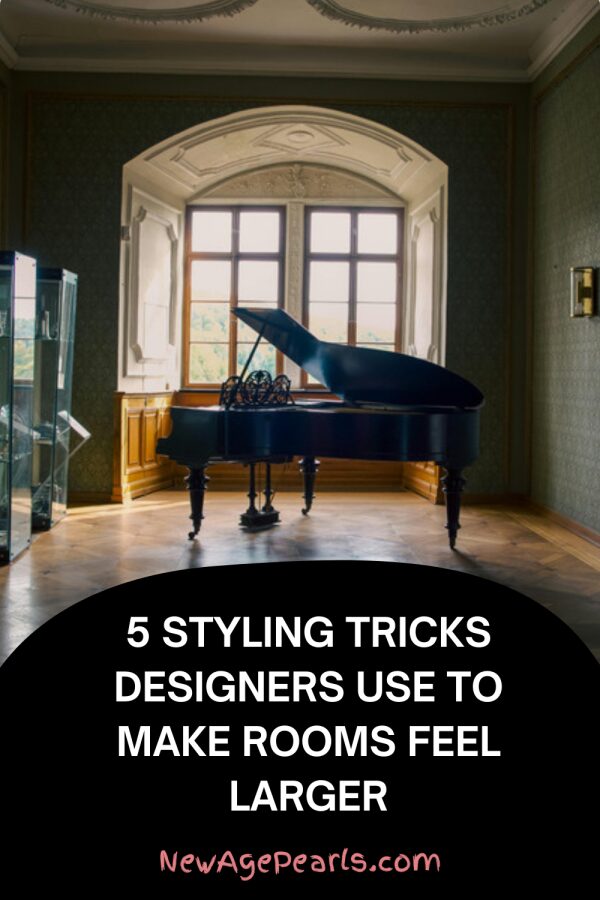
Small spaces present unique challenges, but designers have developed reliable strategies that visually expand rooms without knocking down walls. These tricks manipulate perception through color, placement, and reflection, making spaces feel significantly larger than their actual square footage. The beauty of these techniques is their accessibility—you don’t need a renovation budget, just an understanding of how visual perception works.
Hang Curtains High and Wide
This is perhaps the most impactful trick for expanding visual space. Mount curtain rods as close to the ceiling as possible—ideally 2-3 inches below where ceiling meets wall—rather than just above the window frame. Extend rods 6-8 inches beyond each side of the window. Let curtains fall to the floor or puddle slightly. This creates the illusion of much taller ceilings and wider windows. Your eye perceives the curtain span as the window size, making the entire wall feel more generous. Choose curtains in light colors or soft neutrals that blend with walls rather than contrasting dramatically. This simple change makes rooms feel feet taller and walls significantly longer. The cost is minimal—new rods and proper hanging—but the impact is enormous.
Use Large-Scale Mirrors Strategically
Mirrors are the classic space-expanding tool, but placement matters more than size alone. Position large mirrors opposite windows to reflect natural light and outdoor views, effectively doubling both. A full-length mirror leaning against a wall or a substantial mirror above a console creates depth by reflecting the room back to itself. Avoid placing mirrors opposite blank walls—this just reflects nothing. The goal is to reflect light, views, or interesting room elements that make the space feel extended. Oversized mirrors work better than collections of small ones, which can fragment space and create visual clutter. One dramatic mirror makes a bigger impact than multiple small ones for space expansion.
Keep Furniture Legs Visible
Furniture that sits directly on the floor with hidden legs makes rooms feel heavier and smaller. Pieces with visible, slender legs create visual breathing room underneath, allowing your eye to see more floor space. This makes rooms feel lighter and more open. Choose sofas, chairs, and cabinets with exposed legs rather than skirted or solid-base designs. Even raising furniture on legs by a few inches creates the illusion of more space because you perceive the floor area underneath as part of the room. This principle applies to beds, dressers, and media consoles too. The more floor you can see, the larger the room appears.
Create a Single Focal Point
Multiple competing focal points fragment visual space and make rooms feel smaller and busier. Choose one primary focal point—a piece of art, a beautiful window, a fireplace—and arrange everything to support it. This unified focus allows your eye to travel naturally without bouncing between competing elements, making the space feel more organized and expansive. Paint walls in a single color rather than different hues that break up space. Keep decor minimal so attention flows to your chosen focal point. This visual organization tricks the brain into perceiving more space because there’s less visual chaos to process. Rooms with clear focal points feel larger than equally sized rooms with scattered interest.
Use Monochromatic or Light Color Palettes
Light colors reflect more light and make walls appear to recede, creating the impression of more space. This doesn’t mean everything must be white—it means choosing a cohesive, light color palette where walls, furniture, and floors relate closely in tone. Monochromatic schemes in soft colors make boundaries between surfaces blur, expanding perceived space. Contrast draws the eye and emphasizes edges, making rooms feel more defined and smaller. When walls, curtains, and furniture share similar light tones, the space flows visually and feels more open. Save darker colors and high contrast for small accent pieces. This doesn’t mean boring—texture and material variation creates interest within a light palette without shrinking space.
These five designer tricks share a common thread: they manipulate visual perception to make rooms feel more spacious without changing their actual dimensions. Implement even one or two of these strategies and you’ll notice your small space feeling significantly more open. The key is understanding that perceived space matters as much as actual square footage—when a room feels larger, it functions better and you enjoy it more, regardless of its true measurements.
Leave a Reply